
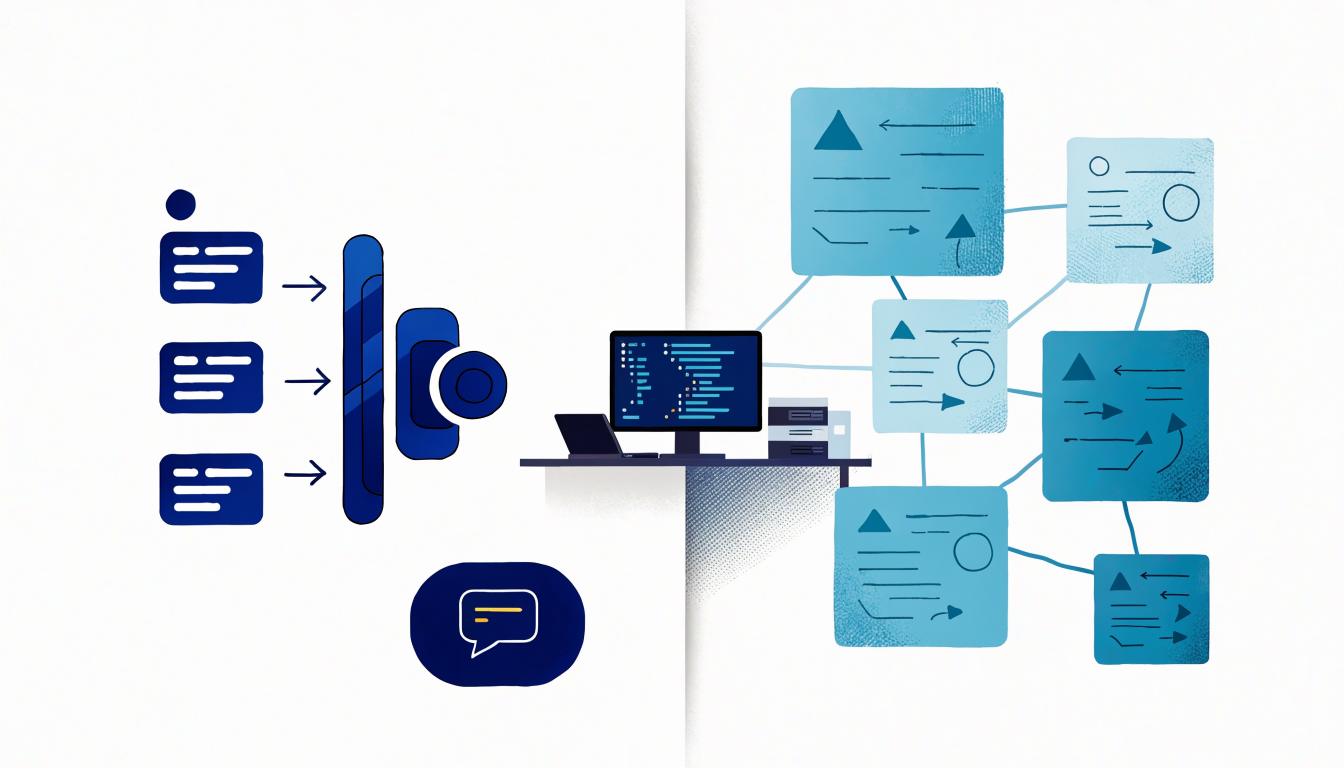
If you spend your days in Claude Code and have ever re-explained the same architectural decision to your assistant for the third time this week, you have probably looked at both claude-mem and Obsidian as ways to fix that. They solve related problems — persisting knowledge across sessions — but they approach it from opposite directions. claude-mem is an automated memory layer built specifically for Claude Code, while Obsidian is a general-purpose, markdown-based knowledge base that you curate yourself. Choosing between them is really a question about how much of your knowledge pipeline you want the machine to run. This comparison walks through what each tool actually does, where they overlap, where they diverge, and which one fits which kind of developer.
What claude-mem Actually Does
claude-mem is an open-source memory plugin for Claude Code, developed by thedotmack and distributed through the Claude Code plugin marketplace. Its core premise is simple: Claude Code sessions produce valuable context — decisions, debugging findings, project conventions — and that context evaporates when the session ends. claude-mem captures it automatically.
When you install it, the plugin hooks into Claude Code's lifecycle. As sessions end, it compresses what happened into structured memory records and indexes them. When you start a new session, relevant memories are retrieved and injected into the model's context, so Claude "remembers" prior work without you pasting anything. Retrieval is search-based rather than a naive dump, which matters because blindly stuffing every past session into context would burn tokens and degrade output quality.
Installation is deliberately low-friction. You add the plugin marketplace and install claude-mem from within Claude Code itself:
# Inside Claude Code's interactive prompt
/plugin marketplace add thedotmack/claude-mem
/plugin install claude-mem@claude-mem
After that, memory capture and recall largely happen in the background. You can also search your accumulated memories directly, which is useful when you want to audit what the system has stored or find a specific past decision.
The key characteristics to keep in mind:
- Automatic by design — you do not write the memories; the plugin derives them from your sessions.
- Claude Code-specific — it integrates with Claude Code's hook and plugin system, not with arbitrary editors or note-taking apps.
- Token-aware — compression and selective retrieval exist to keep context costs manageable.
- Local-first storage — memories live on your machine, which matters for teams with security constraints.
The tradeoff is scope. claude-mem knows what happened in your coding sessions. It does not know about the product spec you wrote last month, the onboarding doc, or the half-formed idea you jotted down on your phone. It is a memory for your AI pair programmer, not a second brain.
What Obsidian Brings to the Table
Obsidian takes the opposite approach. It is a mature, free-for-personal-use desktop application built entirely around plain Markdown files stored locally on your disk. There is no proprietary database, no lock-in: your vault is just a folder of .md files you can open in any editor, version with git, or grep from a terminal.
Obsidian's strength is breadth. Linking notes with [[wikilinks]], a graph view of your knowledge, powerful search, community plugins for everything from task management to spaced repetition, and optional sync across devices. Developers commonly use it for engineering journals, meeting notes, architecture decision records, snippet libraries, and long-term project documentation.
Where it intersects with AI work is the interesting part. Because Obsidian vaults are plain markdown, they can serve as a knowledge source for AI tools in several ways:
- You can point Claude Code at a vault directory and ask it to read relevant notes as context.
- Community plugins and MCP (Model Context Protocol) servers exist that expose Obsidian vaults to AI assistants, letting a model search and read your notes on demand.
- Some developers maintain a "context" note per project — conventions, gotchas, decisions — and instruct their AI tooling to read it at the start of each session.
That last pattern is worth showing, because it is the manual equivalent of what claude-mem automates:
<!-- project-context.md — keep at repo root, tell Claude to read it -->
# Project Context

## Conventions
- All API routes live in src/routes, one file per resource
- We use Zod for validation at every boundary
- Never touch migrations without running `pnpm db:check` first

## Decisions
- 2025-11: Chose Postgres row-level locking over Redis for job claims
- 2025-10: Dropped GraphQL; REST endpoints were sufficient at our scale
The cost is obvious: you have to write and maintain it. The benefit is equally obvious: you control exactly what the model sees, it is versioned in git alongside your code, and it works with any AI tool, not just Claude Code.
Where the Two Tools Genuinely Differ
The overlap between claude-mem and Obsidian is smaller than it first appears. They differ on four axes that matter in practice.
Automation vs curation. claude-mem's whole value proposition is that memory capture requires zero discipline from you. Obsidian's value proposition is the opposite: every note exists because you decided it should. Automated memory is comprehensive but noisy — it will happily retain the twenty minutes you spent on a dead-end refactor. Curated notes are sparse but high-signal. Neither is strictly better; they optimize for different failure modes. Automated memory fails by drowning you in trivia; manual notes fail by never getting written.
Scope of integration. claude-mem is tightly coupled to Claude Code. If your workflow lives inside that tool, the integration is seamless. If you split time between Claude Code, Cursor, and other assistants, claude-mem's memories are not available to those tools. An Obsidian vault, being plain files, is tool-agnostic — any assistant that can read files can use it.
Structure and retrieval. claude-mem handles retrieval for you, deciding what to surface based on the current session. With Obsidian, retrieval is your job: you search, you link, you decide what to paste or point the model at. Obsidian's search and linking are excellent for human navigation, but there is no built-in mechanism that automatically injects the right note into an AI session.
Longevity and portability. Obsidian's markdown vaults will still be readable in twenty years with any text editor. claude-mem's memory store is tied to the plugin and its schema; it is local data, but its usefulness depends on the tool remaining part of your workflow. If you switch AI coding assistants next year, your claude-mem history does not follow you in any practical sense.
There is also a team dimension. Obsidian vaults can be shared via git or Obsidian's paid sync/publish services, making them a plausible team knowledge base. claude-mem memories are inherently personal — they reflect your individual sessions, and sharing them across a team is not the tool's focus.
Which One Fits Which Developer
The cleanest way to decide is to match the tool to your actual pain point.
Choose claude-mem if your primary frustration is session-to-session amnesia inside Claude Code. You want the assistant to remember yesterday's debugging session, the conventions you established, and the approaches that failed — without maintaining any documentation yourself. It is the right choice when you trust automation to capture what matters and you would rather code than take notes. It is also the pragmatic pick for solo developers or small teams where individual session memory is the bottleneck.
Choose Obsidian if your problem is broader than AI memory. If you already keep engineering notes, decision records, or a daily journal — or you know you should — Obsidian gives you a durable, portable knowledge base that happens to integrate well with AI tooling as a bonus. It is the better choice when you want full control over what context reaches the model, when you work across multiple AI tools, or when the knowledge needs to outlive any particular assistant.
Use both if your workflow is heavy enough to justify it. This is more common than it sounds: claude-mem handles the ephemeral, high-volume session memory that nobody wants to write down, while Obsidian holds the curated, permanent layer — architecture decisions, project context files, learning notes. The two do not conflict, because they operate on different layers of your knowledge stack. The one caution is duplication: if you find yourself copying claude-mem's output into Obsidian manually, that is a signal you should decide which layer owns which kind of information.
A practical mistake worth avoiding: treating either tool as a substitute for in-repo documentation. A CLAUDE.md file (or equivalent agent instructions file) at your repository root, committed to git, is still the most reliable way to give any AI assistant project-level context. Personal memory tools complement that; they do not replace it, because repo-level context is what every teammate's assistant reads, not just yours.
Frequently Asked Questions
Yes, and for many developers that is the strongest setup. claude-mem automates session-level memory inside Claude Code, while Obsidian holds curated long-term notes. Since Obsidian vaults are plain markdown files on disk, Claude Code can read them directly when you point it at relevant notes, so the two tools occupy different layers rather than competing for the same job.
No. claude-mem is built as a Claude Code plugin and relies on Claude Code’s hook and plugin system. If you use other AI coding tools, their sessions will not feed into claude-mem’s memory store. For multi-tool workflows, a markdown-based knowledge base like Obsidian is the more portable option.
Obsidian is free for personal use, and your notes are stored as plain Markdown files in a local folder you control — there is no cloud requirement. Optional paid services exist for syncing and publishing, but the core app and your vault remain local, which you can back up or version with git like any other files.
Some retrieval overhead is unavoidable, but claude-mem is designed around this problem: it compresses session records and retrieves selectively rather than injecting everything. The practical risk is less about cost and more about context pollution — surfacing irrelevant memories can degrade output quality, which is why compression and targeted retrieval matter more than raw storage volume.
Yes. A `CLAUDE.md` file in your repository provides project-level conventions that any teammate’s Claude Code instance will read, committed and versioned alongside your code. claude-mem memories are personal to your sessions. The repo file is shared infrastructure; the memory plugin is personal context. They solve different problems.
Conclusion
claude-mem and Obsidian are not really competitors — they are answers to different questions. claude-mem answers "how do I stop re-explaining my project to Claude Code every session?" with automation: install it, forget it, and let it capture and recall session context for you. Obsidian answers "where does my engineering knowledge live?" with a durable, portable, human-curated markdown vault that any AI tool can read. If your pain is session amnesia and you live in Claude Code, start with claude-mem — the install takes minutes. If your pain is scattered knowledge across projects and tools, build the Obsidian vault first. And if you are serious about a long-term AI-assisted workflow, the honest answer is that the curated layer and the automated layer work best together. A good next step: spend thirty minutes writing a project context note for your most active repository, then decide whether automation or curation should own the rest.
Transparency Note: Links in this article are not affiliate links. I recommend these tools and platforms based on their relevance to the topic, and no compensation is received for including them.